

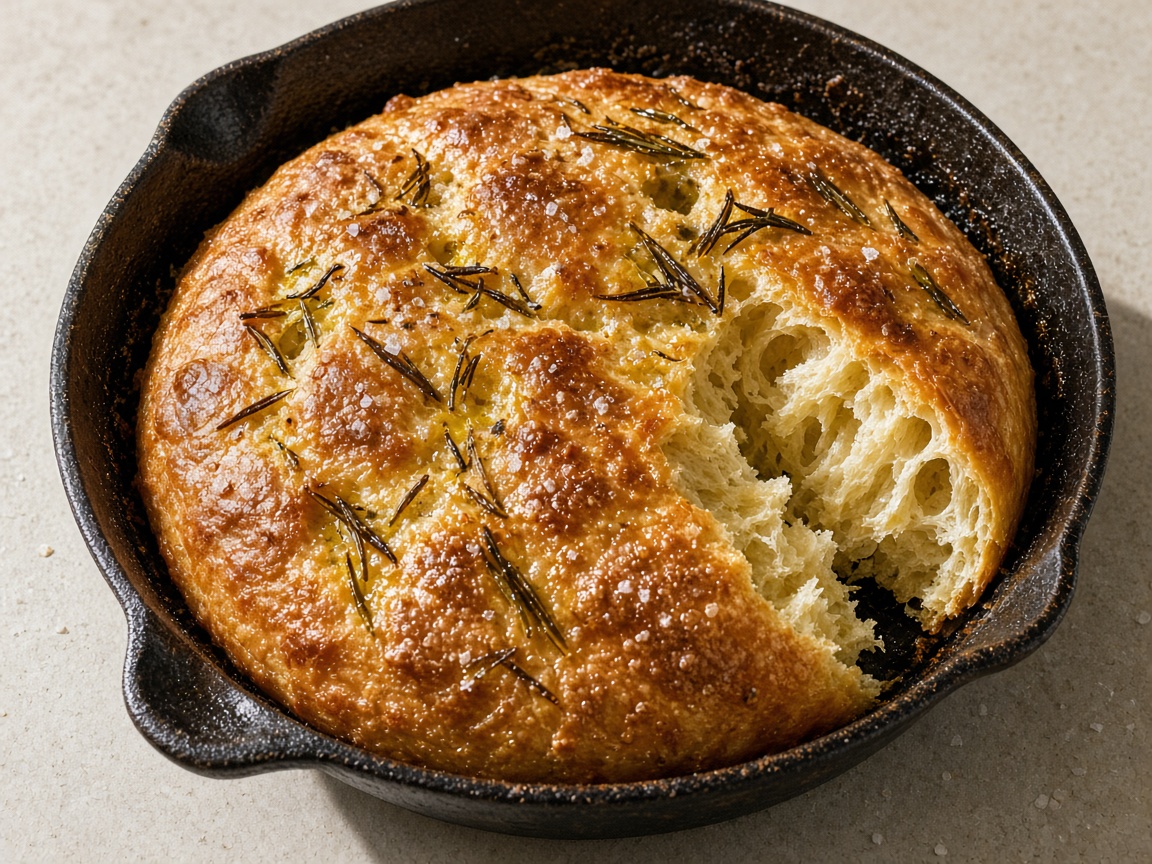
This focaccia does not ask for kneading. Jason stirs a wet dough at night, leaves it in the fridge, and bakes it the next day in a cast-iron skillet. The long rest does the work.
The crumb should look open where you tear it, and the top should be golden in the dimples, not blond. Olive oil is what fries the bottom edge a little. Do not be shy with it.
Ingredients
- 500 g all-purpose flour
- 400 g lukewarm water
- 8 g fine salt
- 3 g instant yeast (about 1 teaspoon)
- 3 tablespoons olive oil, divided, plus more for the pan
- 1 teaspoon flaky salt
- 2 sprigs rosemary, leaves only, or a small handful of olives
Steps
- Stir the flour, water, fine salt, and yeast in a large bowl until no dry flour remains. The dough will look shaggy and sticky. Cover the bowl and leave it in the fridge for 8 to 18 hours.
- Oil a 26 cm cast-iron skillet generously. Scrape the dough into the skillet. Oil your fingers and gently stretch the dough toward the edges. If it springs back, wait 15 minutes and stretch again. It does not have to be perfect.
- Cover and leave the skillet at room temperature for 45 to 75 minutes, until the dough looks puffy.
- Heat the oven to 220 C (425 F). Pour 2 tablespoons of olive oil over the dough. Press deep dimples with oiled fingers, all the way to the pan. Scatter rosemary and flaky salt on top.
- Bake for 22 to 28 minutes, until the top is deep gold and the bottom is browned when you lift an edge with a spatula. Cool for 10 minutes in the pan, then move it to a rack so the bottom does not steam.
Jason’s tip: Dimple firmly, but do not punch the dough flat. You want oil in the holes and air still left in the crumb.
This is a home recipe, not medical or nutrition advice. Check allergens, and see the food-safety note for safe cooking temperatures.
More recipes to try


Allergens in this recipe: The dough is wheat flour, water, yeast, salt, and olive oil. It contains gluten. The skillet is finished with rosemary, not cheese. This is home-cooking information, not medical advice. See the food-safety note.